Throwing Muses, pt. 1: Anthony's Album Guide
GLIB XENNIAL WARNING: this is a beloved '80s college rock band, and I can be written off as a stupid boy. If you'd like to read a tribute even more respectful and infinitely more considered, I enthusiastically recommend Chris O'Leary's post about the band for his 64 Quartets project. My handy dandy profoundly subjective numerical rating scheme is explained here.
Throwing Muses (1986) 9
The Fat Skier EP (1987) 6
House Tornado (1988) 6
Hunkpapa (1989) 8
The Real Ramona (1991) 8
Red Heaven (1992) 7
University (1995) 6
Limbo (1996) 7
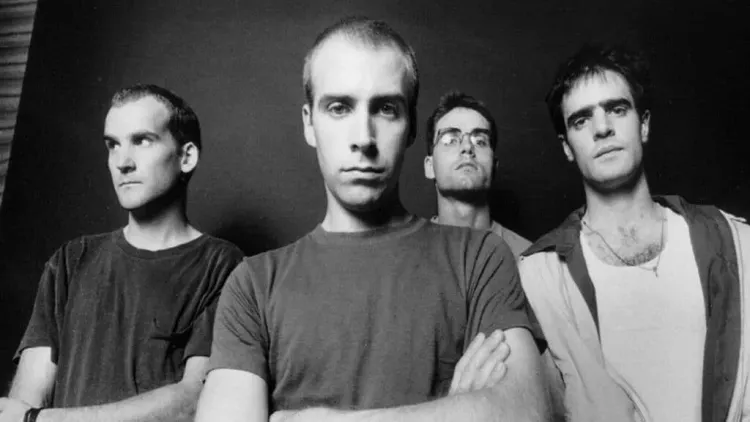
Of all the '80s indie-to-major college-rock crossover, sometimes the strangest feels like Throwing Muses. Sure, they had a straightforward guitar-guitar-bass-drums sound, and Sire Records (their American label through the mid ‘90s) was legendarily astute when it came to new waves. As their flagship act went from the Ramones to The Pretenders to Madonna, Sire stayed committed to the latest in collegiate cool (filling cassette cutout bins at the mall). But head Muse Kristin Hersh…did they think she’d become a star? A young mom angrily declaiming cryptic lyrics, wrestling with post-concussion brain trauma and ever-changing psychiatric diagnoses, sometimes meriting hospitalization? Was the idea that Hersh and her high school chums (one a best friend turned step-sister, one a black female bassist, one a boy with no cymbals on his drum kit) were going to cross REM with The Bangles on the way to platinum? I’m not complaining, but I am curious.
One point for Ryan Murphy: I forgot they used this in American Horror Story!
Throwing Muses began as after school fun in 1981 and became a vocation by 1985, the band moving from their home in Newport, Rhode Island, to Boston, accordingly (a period poignantly, sometimes harrowingly, captured in Hersh’s memoir Rat Girl). Their Doghouse demo cassette, produced by future Fort Apache studio manager Gary Smith, not only impressed New England’s hippest, but Ivo Watts-Russell, whose 4AD label promoted such stylish import section siren songs as Cocteau Twins and This Mortal Coil. The band’s self-titled debut, 4AD’s first release by an American act, shares a similar track listing to the demo (you could contrast and compare them on the out-of-print 1998 compilation In A Doghouse). But where their manic poetry, wiry guitar and martial drumming (again, no cymbals!) initially recalled early Talking Heads (Rhode Island represent!), Gil Norton’s production on Throwing Muses subtly decreases the minimalism without diminishing the tension.
“Call Me” suggests early REM if led by an even more transparent Patti Smith fan, leaping from vengeful shrieks to swooning pleas. “Green” (actually sung by said stepsis Tanya Donnelly - not that you could tell!) adds a “Psycho Killer” yelp. It's on “Hate My Way” where Hersh leaves her predecessors behind, baring more than the Violent Femmes or Mission Of Burma would even want to. At first, the band clomps dramatically as Hersh lists the usual things that inspire bile, from school to Dad to Hitler, before confessing her contemptible muse is…her way. Fragile to furious imagery of psychic danger and disassociation follows (“I have a gun in my head/ I’m invisible/ I can’t find the ice!”), the music ratcheting up with it. The waltz crests into bittersweet beauty, Donnelly adding harmony. Only the pair are painting a notorious mass killing in horrifying fragments, haunted by the young victims and terrified to recognize “Mr Huberty”’s lack of control. The wracked grandeur of it all is so extreme you might assume there’s a string section, but (the band having nixed that idea) it’s just a smart deployment of guitar and synth that turns “Hate My Way” from yet another new wave meltdown, into a potential standard worthy of Scott Walker, if not some infinitely more daring Frank Sinatra. Where Husker Du’s not dissimilar “Diane” can either be dismissed as exploitation, or sympathetically read as a man ashamed of what men are capable of, there’s no doubting the sincerity of “Hate My Way”’s fear and self-loathing. You can only embrace or back away from it.
The only appearance by Americans on 4AD's Lonely Is An Eyesore video compilation.
If that wasn’t enough to seal the Muses’ indie immortality, “Vicky’s Box” blurs Poly Styrene and Alice Cooper, acknowledging homosexual panic and trauma with frayed, epic intensity. “America” opens side 2 with surprise blasts of cowbell country, the band continuing to rage and sway until the jagged, acoustic warble of “Delicate Cutters.” Plenty would recoil at Throwing Muses, either by shuddering at being asked to pay witness to a woman’s emotional collapse, or by smirking “great, Nick Cave for girls.” But I consider it a bracing debut that’s only gained weight from further personal and societal awareness of the experience chronicled. If the band’s gift for tricky time-changes and stylistic shifts risks making entertainment out of Hersh’s pain, it’s because they’ve made art.
The darkest depths of their early songbook unleashed upon the world - and Hersh now a mother determined to achieve stability - it’s no surprise the follow-ups don’t even try to hit so hard. The brief Chains Changed EP was a fine-enough encore, followed by The Fat Skier, an artier exercise recorded in England. The true sequel (and Sire debut) was House Tornado, reuniting them with Gary Smith. The Muses are in fine form musically, Langston’s confident bass keeping the sometimes sisters’ dueling arpeggios and Narcizo’s unpredictable drum rolls from careening away from each other. But, compared to the first album, it’s emotionally guarded (if not devoid of wail and snarl). The arrangements feel arbitrary, and rarely emphasize the lyrical content. Rather than a sophomore slump, Tornado is like a tentative, retroactive debut, capturing the group’s musical chemistry as if Hersh couldn’t pull focus yet.
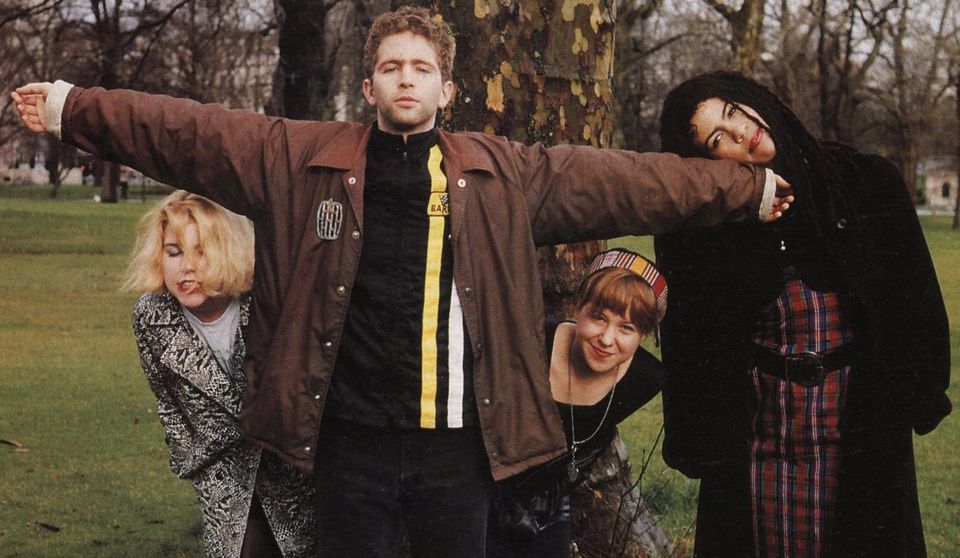
The Muses, now more presentable for MTV, at least late on Sundays.
Though again produced by Smith, 1989’s Hunkpapa splits the difference between the previous pair of albums, simplifying the band’s attack and upping the drama slightly, if not scarily. The single “Dizzy” teases at the idea of a big obvious riff, but (charmingly or not, mileage will vary) offers sudden stop-starts instead of key changes, Hersh repeating the title far more queasily than Tommy Roe did. Other ironies suggesting commercial reticence include the relative briskness of the B side to the A, “Fall Down” matching an anthemic lyric with a muted performance, and - my favorite - “Mania,” a reminiscence about psychiatric hospitalization scarier for its wry amusement (“…therapy”).
The most alarming irony on Hunkpapa was that, if seductive songs were more important than self-expression for Sire, especially with early tourmates Pixies showing what a 4AD act from Boston could achieve, Donnelly’s winsome, naughty “Angel” (“I wanna stretch my skin around you”) suggested she might be better at them than Hersh. Not wanting to rock the boat, Donnelly planned to make the Breeders - her new project with Pixies’ second banana Kim Deal - a release valve for her creativity. Unfortunately, that didn’t stop the recording of 1991’s The Real Ramona (Langston replaced by Fred Abong) from being a troubled slog.
Has anyone ever had more fun than Kristin Hersh in the "Not Too Soon" video?
Produced by Dennis Herring (a pop session guitarist turned modern rock midwife with Timbuk3’s “The Future’s So Bright I Gotta Wear Shades”), Ramona opens with the unprecedented near-Zep stomp of “Counting Backwards” and “Him Dancing.” But as smart and strong as Hersh’s opening two-thirds of the disc are (climaxing with the six-minute feedback freakout “Hook In Her Head”), Donnelly’s “Not Too Soon” (ironically first demoed before their debut) grabs best in show in seconds, flaunting a nonsense bubblegum hook that Hersh would never. Though the band collaboration “Two Step” is a sweet coda to the album’s ingratiating yet still idiosyncratic accomplishment, it was clear these life-long friends needed to separate.
Donnelly, realizing she’d also be second banana in the Breeders, started the heavily hyped Belly with Abong (soon earning a Best New Artist Grammy nomination!). Hersh and Narcizo wasted no time either, recording Red Heaven less than a year after Ramona’s release (Langston back on bass as a session musician). Whether inspired by the lack of a second guitarist’s sweetness, all things 1992, or both, the album re-introduces the band as a hard-rocking power trio, Narcizo pounding the pocket like a pro as Hersh pedal-hops and hollers. Sure, a change-up or two from Donnelly would be welcome, but the attack is so scabrous that, when Bob Mould shows up on “Dio,” you can’t tell if he’s contributing guitar as well as his voice (he’s not).
This might be how you met the Muses, if your 120 Minutes host was Matt Pinfield.
University, featuring new bassist Bernard Georges, was recorded in 1993, though not released until after Hersh’s solo debut, the lovely, string-festooned folk drama of Hips & Makers. Critics were initially excited, and “Bright Yellow Gun” - maybe the catchiest track by default - got some attention. But the album is ironically alterna-anonymous despite being self-produced, and still charted below King, Belly’s commercially underwhelming sophomore effort. By 1996, Belly had broken up and Throwing Muses were finally off Sire. Limbo, issued stateside on Bob Mould’s then-home Rykodisc, was the strongest post-Donnelly LP yet, full of raspy swagger and prominent power trio swing, with Georges making himself felt. All the same, 4AD more interested in Hersh’s softer solo material, and Narcizo eager to do his own thing, the Muses then called it quits.
The trio reunited in 2003 (Donnelly providing harmonies!), and remain active two decades later, new releases appearing occasionally among Hersh’s independent output (both as a musician and memoirist) and a pair of albums by 50 Foot Wave, an even more powerful trio with Georges and Rob Ahlers. A part 2 might arrive once I've sussed that all out, and it's sweet relief the drama of the Muses’ major label moment has been so winningly resolved (Hersh and Fred Abong got engaged in 2020!). Still, there’s no replicating the sound of young friends learning their craft on record, navigating the difference between evolution and dilution. And we're lucky we got see this journey up close.
Come for the cool live footage, stay for Hersh's frank intersectionality in an 1989 TV interview!
Throwing Muses is at 111 on My Top 400 Albums Of All Time. I'm telling you this because I've found people are more inclined to discuss and share reviews if there's a quantitative element at the top or bottom they can easily debate. Prove me right! All raves, requests and recriminations can go to anthonyisright at gmail dot com.