Weezer: Anthony's Album Guide, pt. 1
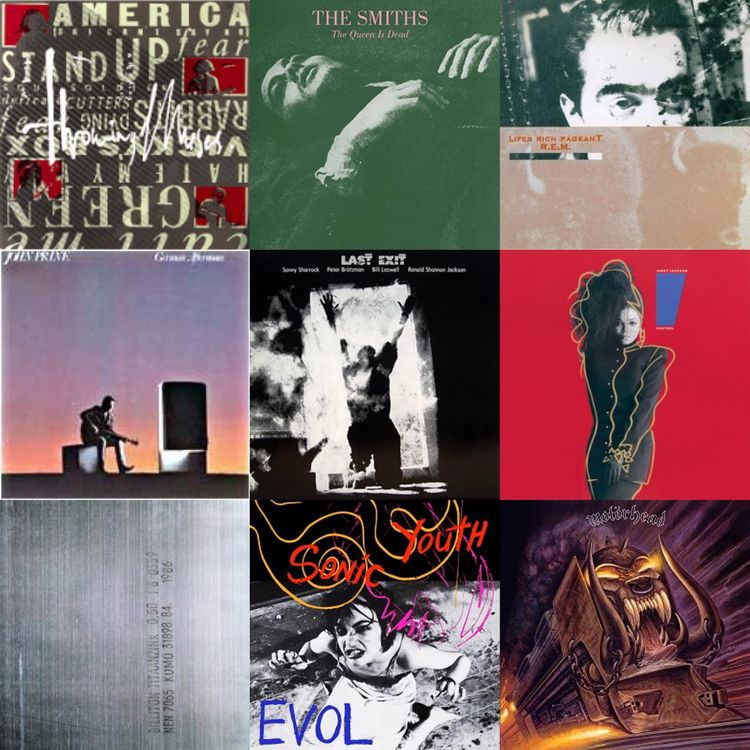
GLIB XENNIAL ALERT: The act of making an Weezer album guide is itself a glib xennial alert. This first entry will be most offensive to my elders, though I’ll sympathetically describe why the albums inspire such love & hate. The later parts will more likely offend people younger than me, some of whom think the band’s 21st century works are already pilloried enough, even unappreciated. But now, we celebrate the glory days. My handy dandy profoundly subjective numerical rating scheme is explained here.
Weezer [The Blue Album] (1994) 9
Pinkerton (1996) 9
Weezer [The Green Album] (2001) 8
Maladroit (2002) 9
Saturday Night Live! So many brilliant performers, so many unforgettable moments. Steve Martin dancing with Gilda Radner. Phil Hartman dancing with Jan Hooks. Will Ferrell owning a Dodge Stratus. DJ Baby Bok Choy. But, from over fifty years of era-defining entertainment, my sentimental favorite sketch has to be the 2018 one about Weezer. The sketch where Leslie Jones and Matt Damon ruin a Thanksgiving dinner by arguing about whether Weezer was only great in the ‘90s, or remains great today. I highly doubt I will ever feel more seen in popular culture than when Jones broke a glass in her hand, screaming “I understand Rivers better than he understands himself!” Though I try very hard to stay zen, to live and let live, and show grace and empathy despite differences of opinion, there is part of me that can go “Oh, I get it: you’re dumb!” just because someone dares to suggest “Beverly Hills” didn’t represent the soul death of an important artist and his fanbase. Unlike Jones’ character, I go all the way to Maladroit, and think “Pork And Beans” is a fine single. But that furious, fickle fan exists inside me, quietly waiting for someone to awaken her. (She’d also like to know where you can get glittery plaid shirts.)
Inside me there are two wolves, arguing about Weezer.
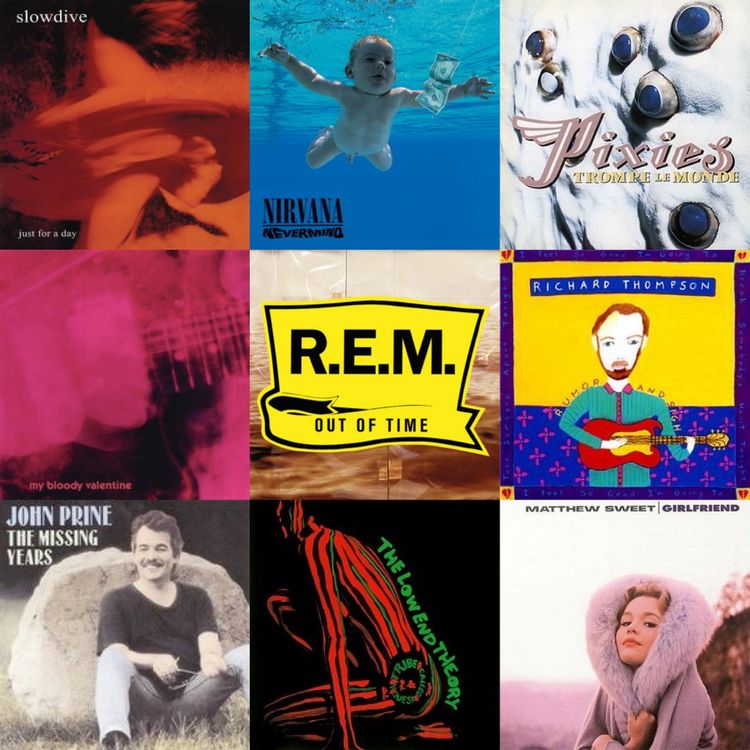
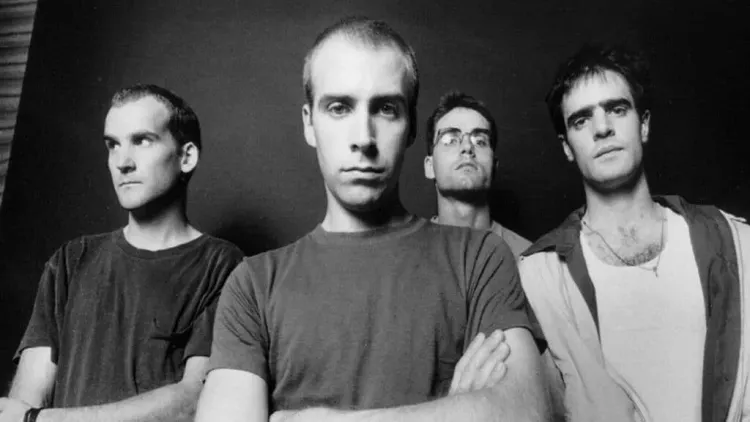
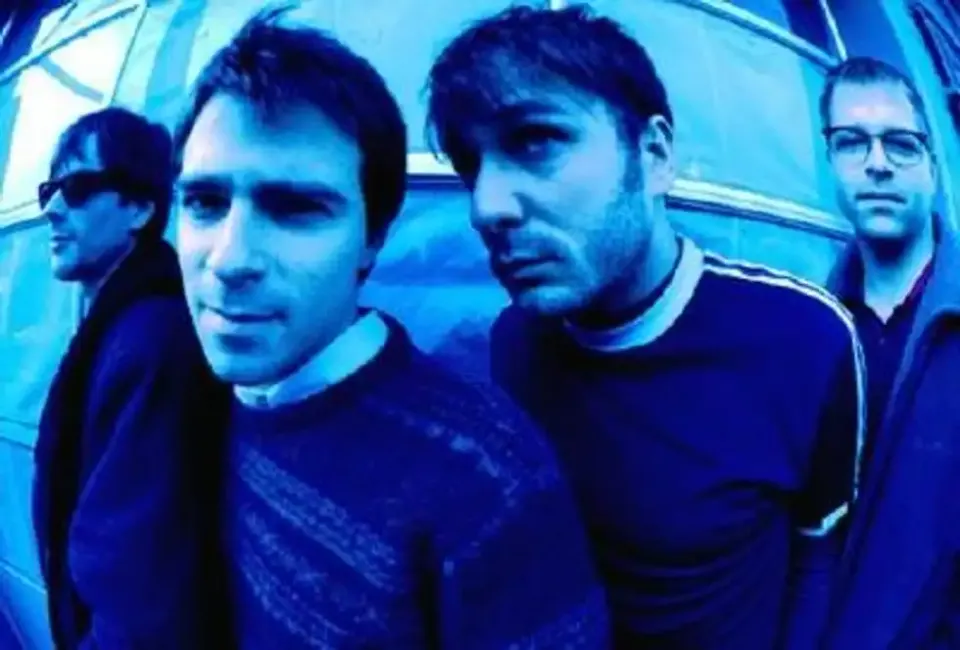
Weezer, in case you’ve been living under a non-alternative rock for the the last thirty years, began when a young Connecticut hair metal band named Avant Garde moved to LA in 1989, changed their name to Zoom, and then broke up. Their guitarist, a real dweeb named Rivers Cuomo, discovered he had more in common with alterna-rockers like roommate/drummer Pat Wilson, obsessing over new-to-him acts like the Pixies and Nirvana accordingly. Cuomo, Wilson, bassist Matt Sharp and guitarist Jason Cropper started Weezer in 1992, signing to Geffen a year later, just before Cuomo planned to quit and go to college like a good boy.
In a stroke of genius befitting young men who’d moved to LA to become famous, but also had a taste for eccentricity, the band chose to make their debut with producer Ric Ocasek, a Velvet Underground fan who made millions mixing new wave fashion with AOR hookcraft in The Cars. I have no doubt Ocasek was keeping up with the latest in guitar sonics, and full of opinions about what was and wasn’t a good idea for an aspiring platinum act to indulge. Sharp and Wilson were clowns who dug old synths and silly falsetto hooks, while Cuomo was the son of a jazz drummer, and the kind of guy who kept meticulous notes on song structure and guitar solo technique (he couldn’t afford a computer for spreadsheets yet, but once he could, he used those too). Cropper was fired during the sessions, replaced by another transplant named Brian Bell.
You'd be forgiven for not thinking this was a big deal in 1994.
Their shared sense of mission helps explain why the band’s self-titled 1994 debut, better known as The Blue Album today, is such a merciless marvel of market triangulation and catchy rock crunch. While Pavement will likely get their own album guide from me, also full of 8s and 9s, next year (Slanted & Enchanted’s turning 35!), I love the idea of telling someone the band was rendered commercially redundant by Weezer’s opening track, “My Name Is Jonas.” Wacky, cryptic lyrics delivered in boisterous sing-song over righteous riff-rock, except it’s tight as fuck? Peaking with an ironic harmonica solo? That’s about all Pavement had to share with the world and then some, right? Except Weezer didn’t repeat themselves on track 2, instead expressing blunt, romantic frustration over an even more crushing bottom, with even more jubilant harmonies, and searing air-guitar bait. Checkmate, Matador Records!
If you’re an aging hipster around 50 or above who still can’t figure it out (but actually wants to), skip the singles and revisit “The World Has Turned And Left Me Here.” The music is total post-Nevermind fuzz-rock (Wilson’s drums loping as authoritatively as Dave Grohl’s), but with lyrics plaintive enough that the harmonies reach back not just to ’92 Pavement but ‘62 Beach Boys. The guitar solo begs to be mimed by teenagers, and the extended feedback coda is magnificently sculpted to lead into… “Buddy Holly.” You know how The Cars weren’t as hip as CBGBs bands, but you didn’t mind cuz the hooks were so good? That’s how kids too young to hear the Pixies before Nirvana felt about Weezer. Pavement’s 1994 album Crooked Rain, Crooked Rain was a huge part of my adolescence, but when asked by peers in a new town what kind of music I liked, I had to settle for bringing up Weezer, the goofy guitar-rockers that were actually on MTV before Sundays at midnight. And at least I was allowed to watch 120 Minutes in the summer and on three-day weekends. A lot of schoolchildren didn’t even know that was a thing to do.
The closest thing to "indie rock" a lot of young’uns had heard in 1994. I know, already-then-olds. I know.
Today, I slightly prefer Weezer to Crooked Rain. The first six tracks are even more unblinking a blast than Side 1 of The Cars. There’s no “I’m In Touch With Your World” to prove commitment to arty oddity, just blazing rock pyrotechnics and rumbling chug topped by cavalier whimsy and timeless pining, the climactic “Surf Wax America” making their synthesis of decades of SoCal Boys Together Outrageously overt. “Say It Ain’t So,” the required midtempo expression of suburban anguish, is good for what it is, but not my tempo today. “Holiday” has never been my tempo, one pedal-boosted Beach Boys homage too many, but I’ve outgrown my embarrassment over the on-the-nose “In The Garage,” its unapologetic praising of Kitty Pryde and Kiss a foreshadowing of their next album. And the closing power ballad “Only In Dreams” is an aching high school dance fantasy no one who sounded like Weezer before Weezer would have been shameless enough to give fans. Except maybe Cheap Trick, another example of the crass rockmeisters given a pass by Gen Xers because they first heard this antecedent before true hipsterdom.
Where Ocasek likely would have suggested releasing Weezer II next, Cuomo was way too ambitious and emotionally wracked for such a move. The band was huge, but not particularly respected. Director Spike Jonze Forrest Gumping them into Happy Days got the credit for “Buddy Holly”’s chart success, the clip even being attached without their knowing to the Windows 95 installation CD-ROM (take a second to reflect on the words “installation CD-ROM” if you need it). Cuomo was already planning a rock opera named Songs From The Black Hole before he freaked out and enrolled at Harvard, Sharp & Wilson keeping busy with a synth-rock project called The Rentals (“fun” fact: their touring keyboardists were a pre-fame Maya Rudolph and a future GOP Iowa state senator). A mid-‘90s rock star who knows the cool kids think he’s a poser, studying classical music at Harvard, needing a cane and painkillers because of leg surgery, unrecognized because he isn’t dressed like a kid at Arnold’s Drive-In…that isn’t going to lead to “I’m Still Undone.”
"They remind me of you and your friends," said my Mom, as she finished her puzzle and called it a night. I was flattered, honestly.
Recorded and self-produced in spurts around Cuomo’s class schedule, the band released in Pinkerton in 1996, no one really knowing what to make of it. The local alt-rock station played the single “El Scorcho” plenty, my high school goober friends and I unsure whether the eccentric, slangy tale of crushing on a cellist who’s never heard of Green Day was the good or bad kind of funny. I bought a store’s promo copy (no artwork, so it was even cheaper! Score!), and gave it a 7/10 for the teen section of the local paper. Pinkerton was a fine second swing, a little more ragged and indie sonically, but that made sense in 1996 (as did the album’s failure to do big numbers). Quite the romantic late bloomer myself, it wasn’t until college that the album’s schizophrenic discontent about sex and romance really began to resonate. After a friend and I shared this newfound appreciation with each other, we discovered online that we truly weren’t alone. So many lyric and fan sites. So many.
“Why?!” cry my spiritual older siblings, already having spent this century smacking their heads in confusion. “Why, why, why?!” Instead of early ‘60s Beach Boys and the Cars, the evocative reference points here are early ‘70s Brian Wilson songs and The Modern Lovers. Just as Jonathan Richman earned “proto-punk” status by explicitly suggesting he’s a respectable boy who doesn’t want to be a hippie, wishing over garage rock tributes that there was a girl who understood, Rivers Cuomo became an “emo” avatar by laying out the dilemma between an indie rock heart and a hair metal dick. The opening “Tired Of Sex” wailed hysterically about knocking boots on the regular, but it all being frustratingly casual. “Why Bother?” rhymes “it’s just sexual attraction” with “so I better keep whackin’,” the intrigued either identifying with his sentimental stud life or living vicariously through it. “Getchoo” is hatefully hyperfocused on a specific hottie, and “No Other One” suggests the stifled complacency of the emotionally attached in a world full of nookie. Throughout, the band is swinging harder and whooping louder than ever, Rivers’ lyrics - crazy straightforward even when not contrasted with the time’s Vedderesque norm - are offset by his subtly ambitious arrangements, bandmates throwing in extra hoots and hollers as good dorks should.
Too indie rock for squares in '96.
Rock snobs older than Rivers, let alone most Weezer fans, might have to think a second to recognize how passive aggressive and proto-m’lady The Modern Lovers were about girls who “cracked” and were seduced by sex with Hippie Johnny. But right away, they’d balk at a rumination about a love object revealed to be a lesbian, or “Across The Sea,” where Rivers admits he wonders how the barely legal author of a fan letter from Japan masturbates, the song’s bridge climaxing with “it’s all your fault, mama/ it’s all your fault!” People who didn’t want The Blue Album’s AOR-ification of underground guitar rock sure as shit didn’t want to know what sexual neuroses would compel one to do such a thing. But young posers dealing with big feelings and seeking big sounds were grateful to hear someone else was struggling with conflicting musical and romantic impulses, instead of politely sublimating them. And where much of the white belt emo that followed settled for form-fitting clothes, writing poetry in cursive about being sex pests, and playing metal while calling it punk, Pinkerton actually lays out the drama, tying it to goddamn Madame Butterfly on the closing acoustic ballad, affecting or unnerving depending on what you assume his “body” told him to do. There’s even a fictional ocean map under the CD tray, its geographical points of interest referencing figures like Yngwie Malmsteen, Lou Barlow, Joe Matt and Camille Paglia. The kids learn it by watching you…
As I noted, it took a minute for word to get out that one of the many flop follow-ups of 1996 was a problematic totem for future generations of guitar heroes. In real time, Weezer experienced the industry shift away from alt-rock like everyone else, as well as the sisters who ran their fan club (already paid tribute on a b-side) dying in a car crash after a show in 1997. Matt Sharp left the group after the tour, focused on The Rentals, and Cuomo returned to Boston for more schooling. Eventually, the remaining trio, joined by new bassist Mikey Welsh, tried to make sense of being a pop-rock band with a huge, shiny first album and burgeoning cult around the ugly second one. Nothing clicked until a triumphant festival show in Japan (how Spinal Tap!), as well as a run on the Warped Tour. Weezer then reteamed with Ric Ocasek to record a self-titled third album.
"Why is Weezer at the Warped Tour? Why are people cheering? What's happened?" - Your more refined rockers in 2000.
The emotional honesty of Pinkerton is abandoned entirely on 2001’s The Green Album, the lyrics frequently incoherent (“it’s in the photograph of love”), sometimes not even making sense grammatically (“[should you] turn your heart away…I’ll be beggin’ for that girl to stay”). The first single, “Hash Pipe,” if you bother to decode it, is a narrative of male prostitution "down on Santa Monica, where tricks are for kids.” But Cuomo might as well be singing the phone book, as fans were thrilled just to hear the guy bashing out tight rock bubblegum after five years of relative silence. “Island In The Sun” was the plaintive, yearning ballad the label always wanted, a “Say It Ain’t So” devoid of any kind of uncomfortable angst, less specific than even Bertie Higgins in its escapist fantasy. Just under a half hour long, The Green Album is determined to earn comeback status...and nothing else.
The critics who’d seen Woodstock ’94 turn into Woodstock ’99 were unexpectedly enthusiastic, maybe just glad to encourage a youth-adored platinum rock band not rapping or screaming. The associated internet-bound xennials and under, as we know, did backflips in triumphant gratitude. A struggling Welsh was replaced by Scott Shriner, a butch Weird Al lookalike less promising than Matt Sharp would have been (Sharp claimed he was this close to returning, before Cuomo changed his mind), but lukewarm water enough to stick around ever since. Until Green Day went full The Who on 2004’s American Idiot, Weezer looked like they might be the most enduring rock act of the ’90s.
Yeah, I prefer this to Yankee Hotel Foxtrot, Yoshimi...don't look at me like that.
Thoroughly encouraged, Weezer started posting mounds of mp3s online, Cuomo even personally mailing CDs of 8 tracks to supportive radio stations (I get misty just remembering that day at my alma mater…). Geffen was not pleased about the unprecedented openness, which might be part of why the self-produced Maladroit failed to set the world on fire upon release in 2002. It also might explain why I enjoy it so much today. Maladroit is a confident and playful celebration of Weezer as a hook factory. The playing is loose but powerful, a practiced road band churning out their leader’s prodigious output with the excitement and ease that comes with overdue acceptance. Not that every song is happy, what with “Slob” lashing out at an elder, “Slave” bidding a lover adieu, “Space Rock” a coded grumble about the online “kids.” But - though only just over a half hour - it’s as carefree as The Green Album was guarded, the true victory lap after a decade defying the odds.
With demos for 28(!) songs shared online through 2003, why did album five not show up until 2005? And why did it not feature any of those? Find out in…part 2!
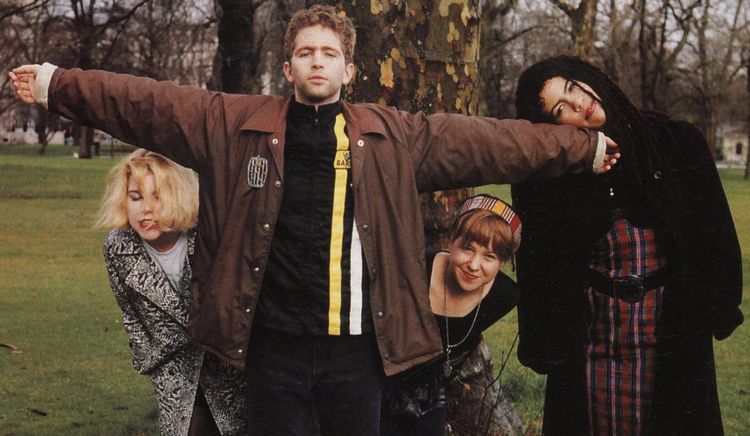
I didn't bother to acknowledge the band's beloved B-Sides, but here's a great Petra Haden duet That Dog fans should know about.
Weezer [The Blue Album], Pinkerton and Maladroit are at 102, 139 and 176 on My Top 400 Albums Of All Time. I'm telling you this because I've found people are more inclined to discuss and share reviews if there's a quantitative element at the top or bottom they can easily debate. Prove me right! All raves, requests and recriminations can go to anthonyisright at gmail dot com.