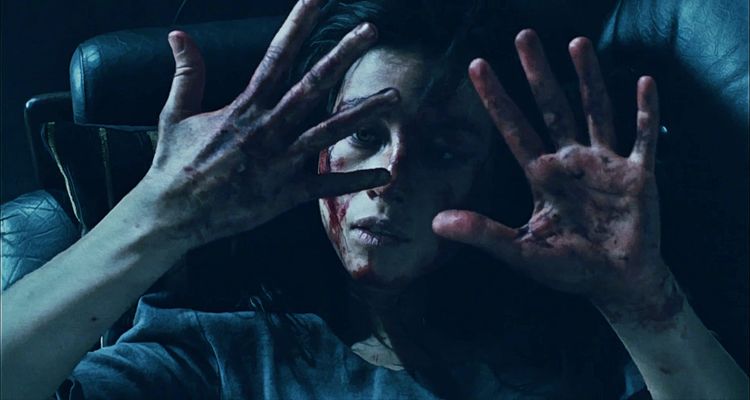
Cool Auteurism: Take Dump 6/13/26
Ever since Francis Truffaut and his pals at Cahiers Du Cinema first dropped the term on us, “auteur theory” has mostly argued that the director is the most important person in filmmaking. That the director is usually the guiding hand on a film, with its considerable crew and many moving parts, hence the one most easily saying something. But - starting with Andrew Sarris in the early ‘60s - a lot of film critics who only wish they were French tend to take things too far, declaring the best directors are the ones you can’t ignore. Pauline Kael (kisses fingers, points them to the sky) rightly ripped shit on them for the conceit, noting that you’d end up praising directors who repeat motifs indifferently, rather than those judicious about which formal choices best serve the material. The gifts of a Billy Wilder or a John Huston are treated as lesser than Charlie Chaplin or Alfred Hitchcock, because Wilder and Huston didn’t whack you over the head with their presence in ways that quickly move from signature to cliche. The ability to follow Prizzi’s Honor with The Dead, or to make The Apartment and Double Indemnity, becomes a demerit. Repeating the same dramatic zoom, irrespective of the film’s genre, becomes a virtue.
Some dismissed Kael’s party pooping by noting she was a big fan of Brian DePalma, one of the most obnoxiously unmistakable directors in modern film history. But she wasn’t denying the potential thrill a director’s touch. She just thought it was stupid to treat a recognizable director as the be-all-and-end-all of cinematic artistry. It’s not necessarily a sign of rarefied taste to marvel in Michael Bay’s consistent use of sweaty cartoon and metal bashing against metal. Rather, it could be a smart person making a game of watching dumb shit. Not all voices are equally worth hearing, and a director’s “voice” is just one of a couple dozen reasons a movie might (or might not!) be worth your time. When film lovers aspire to find the essence of cinema, they ignore the breadth of what’s present in movies, perhaps in hopes of dignifying a superficial, mundane perspective through proving “objective” merit.

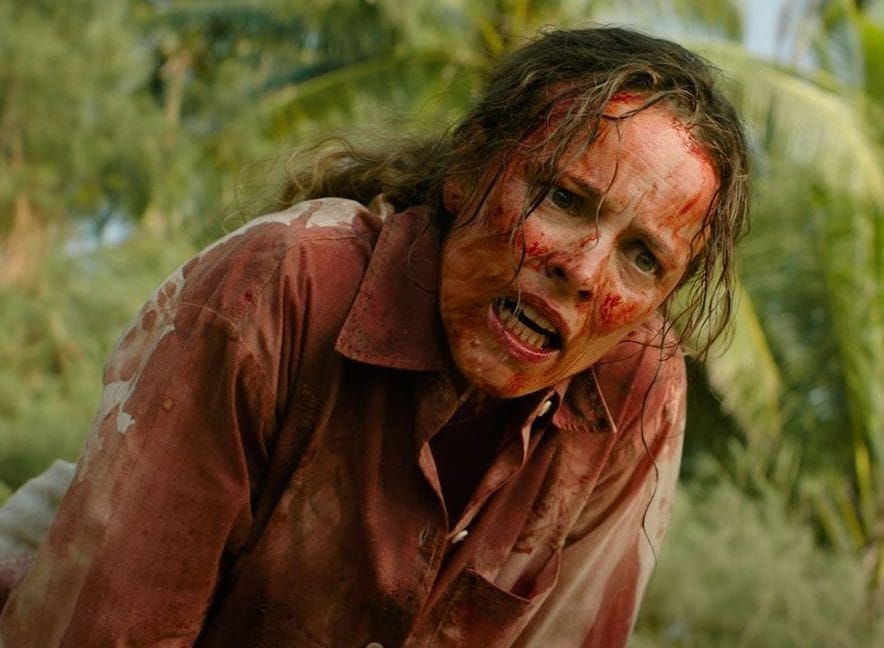
Like Kael, my cynicism about the obsession with “voice” doesn’t keep me from loving author’s voices. Sam Raimi, who brought his bravura Three Stooges homage and manic zhuzh to both the low-budget Evil Dead and the ‘00s Spider-Man trilogy, is a perfect example. Today he’s more prolific as a producer, giving younger directors from around the globe a chance to build their skill sets on Evil Dead off-shoots and other cheap thrillers. But, for the second time this century, Raimi has bothered to helm an IP-free project chock full of pointedly comic chaos and droll absurdity. In 2009, it was Drag Me To Hell, where a “nice girl” for once looks out for number one, and is quickly condemned to hell, the movie earning a PG-13 because the spraying liquids following jump scares were never blood red. This year, it’s Send Help, where a “nice woman” wrestles with selfish ambition, in a context devoid of mysticism, but still full of crunch and goo.
Rachel McAdams plays Linda Liddle, an erotic dream of nerdy enthusiasm in frumpy clothes, frazzled hair and smears of tuna fish on her cheek (I’ve been told I have weird taste). Overdue for a promotion at work, she’s smugly dismissed by the newly throned company scion (Dylan O’Brien), who’d rather be surrounded by golfing buddies and more stereotypically sexy assistants. Her humiliation reaches new heights as the bros mock her Survivor audition tape on a corporate plane. Then the plane crashes, Liddle and her new boss the only survivors on a deserted island. Irony!
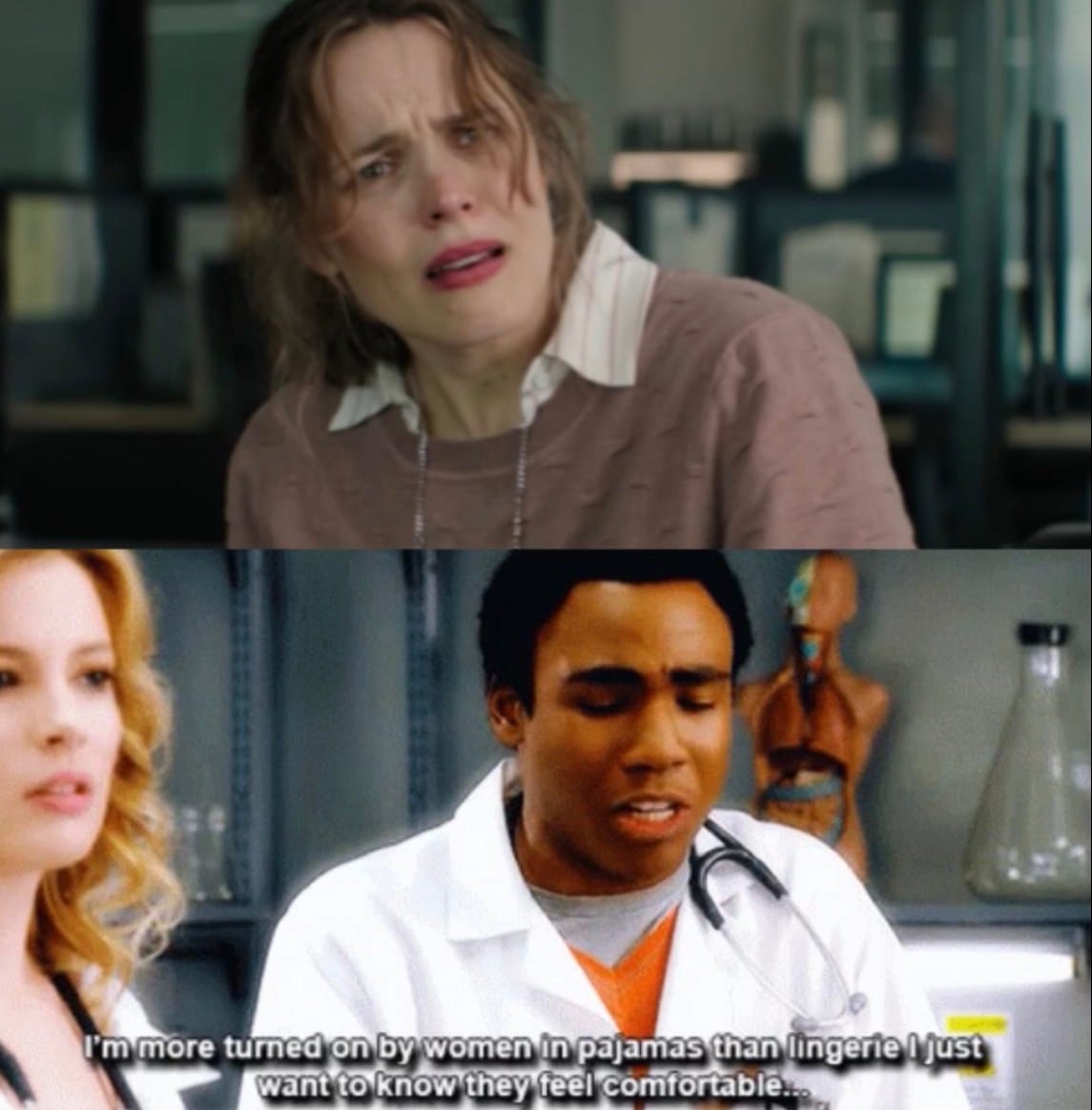
While what follows isn’t devoid of sexual frisson, that’s far less important to Raimi than it was for Linda Wertmuller or Madonna. Instead, O’Brien and McAdams engage in escalatingly violent games over mutual need and contempt. Liddle grows confidence in ways (check out that palm frond sun visor!) and desperation in others (why would she want to go home?), as her less assured work superior wavers between catatonia and seething outrage. Some weak CGI aside, Raimi gets most of his kicks the old-school way, putting his actors in almost Looney Tunes-level danger and letting them bug out accordingly. McAdams was fantastic as a defiantly calm, surprisingly resourceful woman trapped on a plane with a psycho in Wes Craven’s Red Eye twenty years ago, but she’s just as good going ham with Raimi here. My only regret (mini-spoiler!) is a Breakfast Club-style glow-up at the tail end. Why couldn’t she still be into button-downs and tuna fish?
Hitchcockian Hollywood auteurism - where the director is a fickle, darkly amused god who can’t trusted to play straight with us or the characters - is out of fashion in Hollywood. Self-awareness must either be all-encompassing, Scary Movie-style, or providing a transparent, award-worthy message. Many audiences don’t like it when they can’t tell if the director knows the scene is over-the-top, or if a character is supposed to be good or evil. A twist is ok if it’s sold as a twist, but tonal ambiguity and moral grayness is a jolly lots of people can do without. Not Raimi, though, and neither can fans like me. FIVE BAGS OF POPCORN.
While horror is the easiest genre to make a profitable name in today, that doesn’t mean fans don’t get sick of you. A lot of people are tired of the Osgood Perkins gestalt, grumbling that movies like Longlegs and The Monkey tend to bog down detailing the goofy, arbitrary rules for the supernatural terror we’ve seen. Exposition that doesn’t really explain why these lawful nightmares exist, either as poetic justice or logical consequence. The devil wants dolls to fuck up families on specific days? This wack-ass death toy just fell into these brothers’ lives? Sure, earnest auteurists forgive M. Night Shyamalan the goofy pretenses of Old and Lady In The Water, because they can tell he’s aiming for awesome, Spielbergian magic. But Son Of Norman Bates seems happy making wonky A24-core. That’s not cinema.
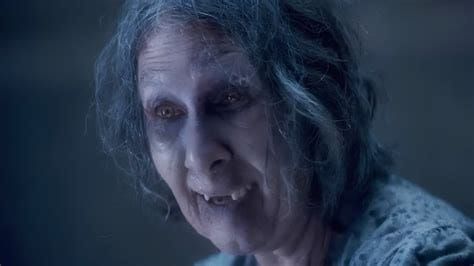
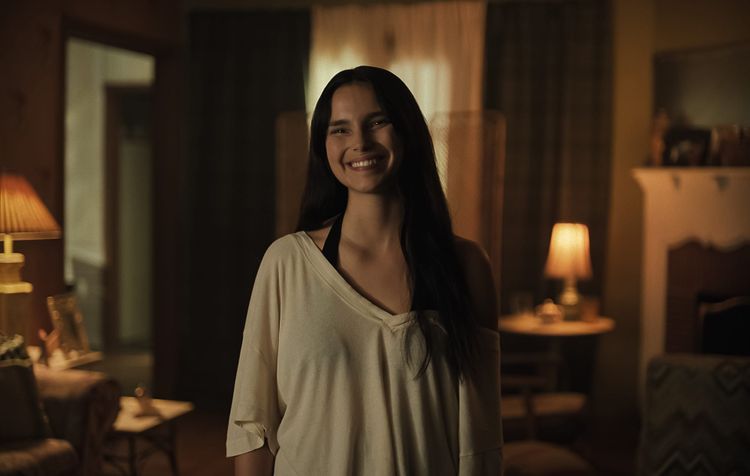
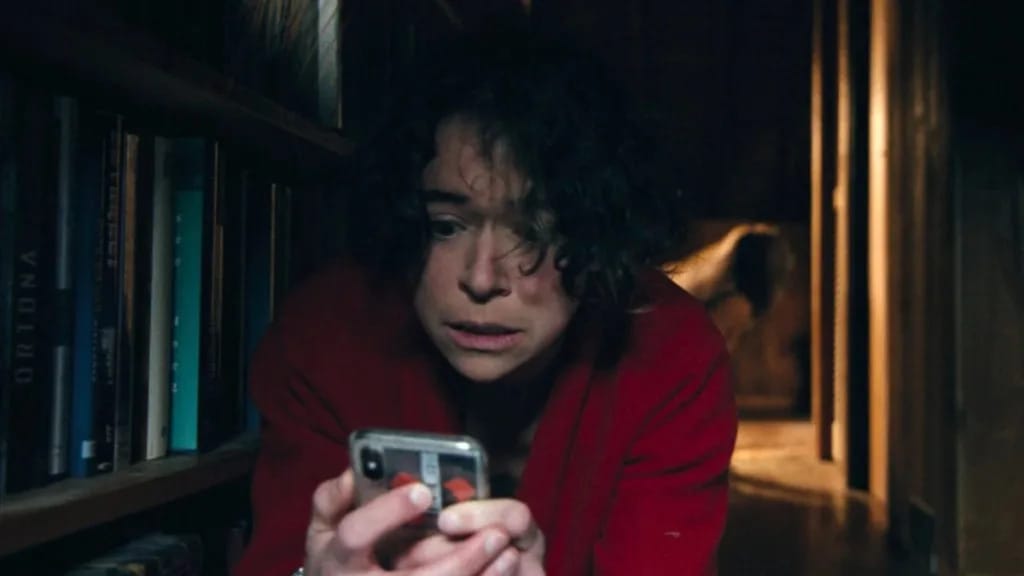
Well, fuck your cinema. I hope Perkins keeps making movies year after year, where we see the same rooms and faces from new, surprising angles, somebody going “the hell?” at weird shadows until they learn their uncle has to tickle a barber to death once every leap year or Satan will turn them into donkeys. Keeper, made to keep himself busy and the Canadian crew of The Monkey paid while production was halted by the WGA/SAG strike, is shamelessly in Perkins’ established lane. Tatiana Maslany is the city girl venturing to her boyfriend’s cabin in the woods, still not sure if they’re getting married or if she’s secretly his side-piece. Perkins immediately loads every shot with tension, well before anything tense actually happens. No claustrophobic or eccentric angle is missed in this wood-paneled modern gothic getaway, surrounded by trees that go dizzyingly up to heaven. Rossif Sutherland’s bearded doctor boyfriend is a little coy, and the place is isolated. But, for a long while, all an audience member can really shout at the screen is “girl, get out of that mis-en-scene!”
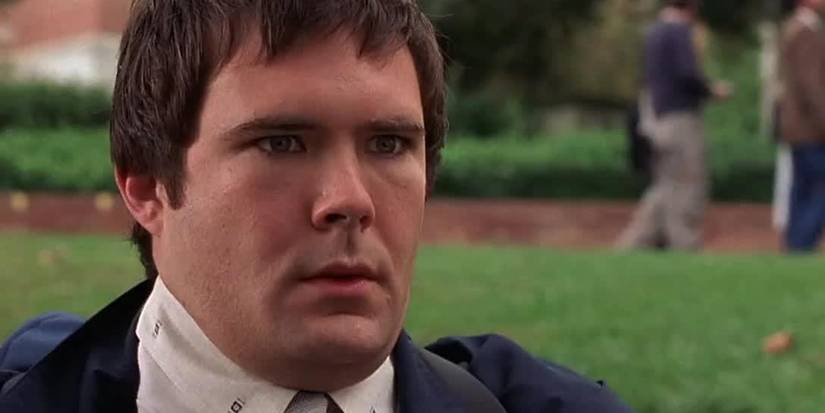
Eventually things turn truly ghoulish, though Maslany plays it so neither she nor we are sure if the madness is coming from outside or inside her skull. And, as I’ve suggested, the final answer is more “hmm, random” than poignant. But I couldn’t care less. I’m at a “blind Stephen Root” level of love with Perkins’ eye for familiar locations at novel angles, and then finding different angles of the same locations after that. And I find endearing his building theme of “the devil works in mysterious ways,” where the pathos comes from how we deal with batshit scenarios, rather than the scenarios themselves. Gretel + Hansel, thanks to our life-long acceptance that yeah, sometimes cannibal witches wait in the woods for kids to show up, remains the best entry-point into Perkins’ filmography. But Keeper is yet another delightfully macabre entry. FIVE BAGS OF POPCORN.
Sometimes I’ll argue Quentin Tarantino ruined “Hollywood auteurism.” Firstly, he’s such a popular celebrity (how many auteurs have hosted SNL?) that he normalized directors focusing every single movie into a career gestalt, never making an off-brand genre exercise, lest they risk losing their mojo. Producers wouldn’t want a Wes Anderson movie that didn’t look like a diorama. They probably hated that Phantom Thread was a “small” film, devoid of Paul Thomas Anderson’s usual cliches and grandiose palette. But secondly, Tarantino loves his characters too much to really fuck with them. Though he’s another Kael acolyte who loves DePalma and has unapologetically hot takes about Hollywood, he’s incredibly sentimental about movies. With the exception of a sudden character dispatch or two in the ‘90s (ok, and some soon rectified misogynist violence in Death Proof), he doesn’t risk losing the audience in the name of a bigger, less predictable goal. He’s even become the guy who will change world history to reward the audience, letting the stars kill Hitler and save Sharon Tate. Today, if a director was smart enough to truly mess with mainstream audiences, they’d have little impetus or opportunity to.
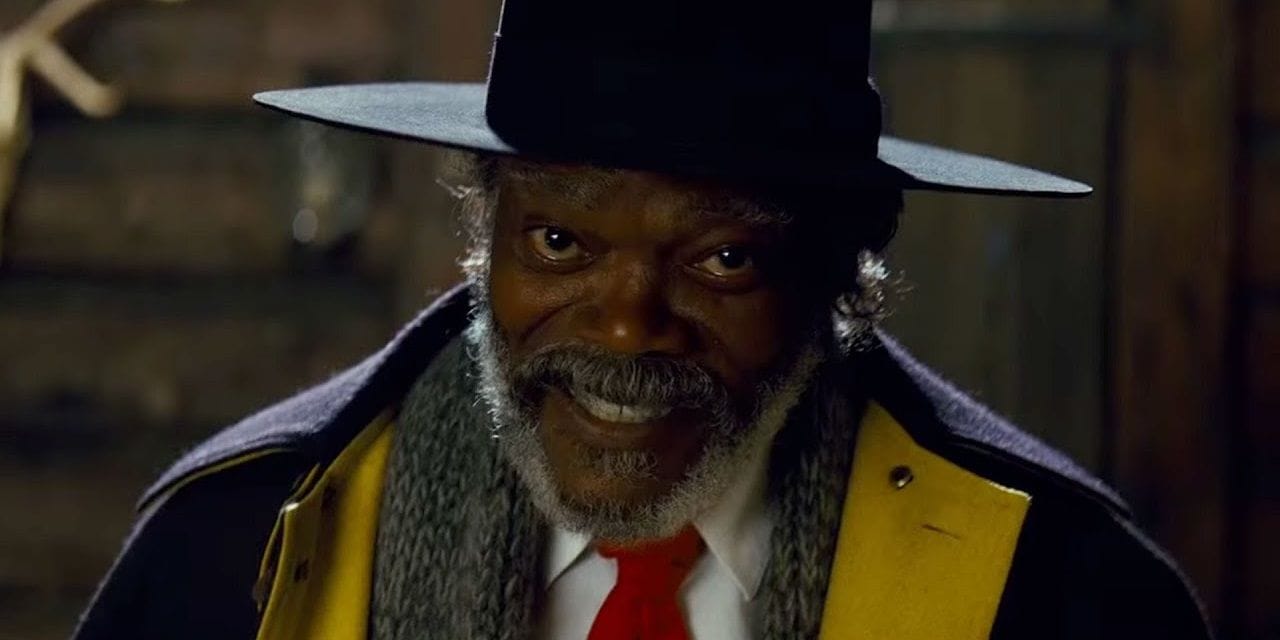
But a talented auteur he remains. And a movie of his I’m embarrassed to return to is The Hateful Eight. All critiques of his 21st century output are valid here. The time jumps are protracted and predictable, often telling us things we already know. He revels in monologue and bravado, the sound of his own voice coming out of good actors. He flatters himself as coarse and cold-blooded by indulging in cavalier hate speech and gore, while totally cornball about macho code. He’s almost the typical writer-turned-director in reverse: once remarkably gifted in cinematic language, growing more static, like he’d be happier writing novels and luxuriating in a world, rather than keeping us curious. But it’s still a movie where Kurt Russell, Jennifer Jason Leigh, Samuel L Jackson, Bruce Dern, Tim Roth, Michael Madsen, Demian Bichir and Walton Goggins hoot and holler and stand off with guns. I can’t blame the guy for wanting to luxuriate in that world, and I’m not mad he got to share it with us. POPCORN CLASSIC.
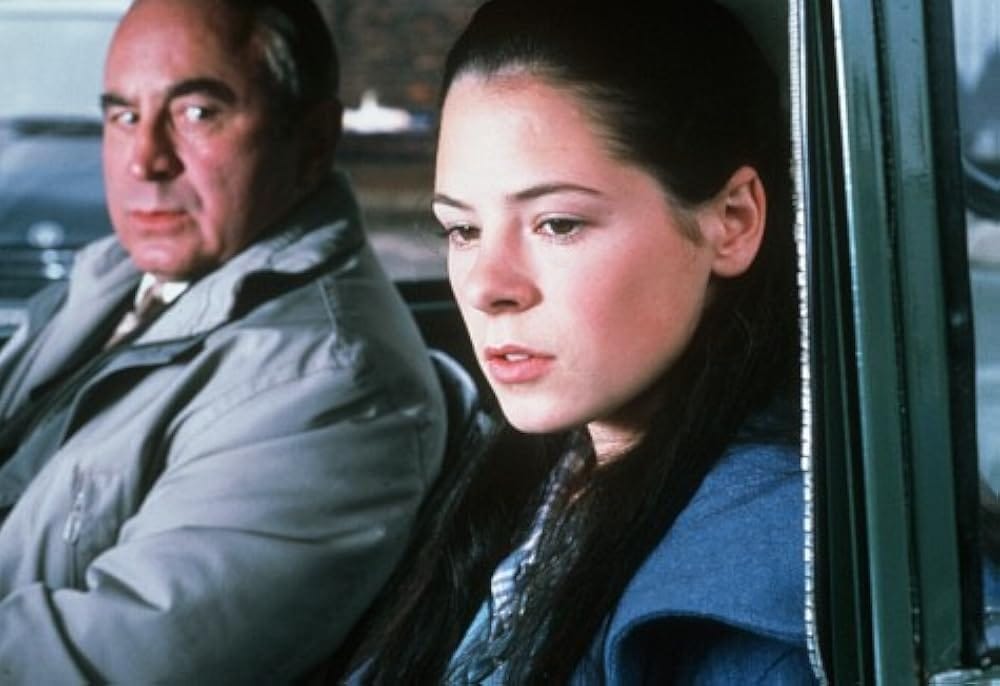
I haven’t seen enough Atom Egoyan films to know what he’s good at. Maybe I’ll watch some of his early ‘90s Canadian films before they leave Criterion this month. But while Felicia’s Journey from 1999 isn’t as embarrassing as the wan sub-Lifetime thriller Chloe from 2009, I wonder if Egoyan would find merely "thrilling" an audience depressing. And can you really make a thriller without some love for trash? Elaine Cassidy plays Felicia, a young Irish woman in way over her head, searching for a prodigal boyfriend in England. Bob Hoskins plays Hilditch, a catering manager who loves to control troubled women the way his TV chef mother controlled him. Initially, this attempt to mix two wildly different types of cinematic portraiture is gripping. It’s unclear whether the film will surrender the narrative to the warm-blooded heroine or the cold-blooded villain, both modes uneasily co-existing. But eventually Egoyan settles for maudlin hysterics and a blandly tasteful resolution, with unearned voiceover about centering the victims of male violence (the film doing no such thing beforehand). I last saw this on VHS, but couldn’t remember how it ended. Now I know why. THREE BAGS OF POPCORN.
My popcorn ratings are explained here. If you want to explain the power of the Atom, or suggest a glorious example of something streaming, by all means, send such thoughts to anthonyisright at gmail dot com.