The Psychedelic Furs: Anthony's Album Guide
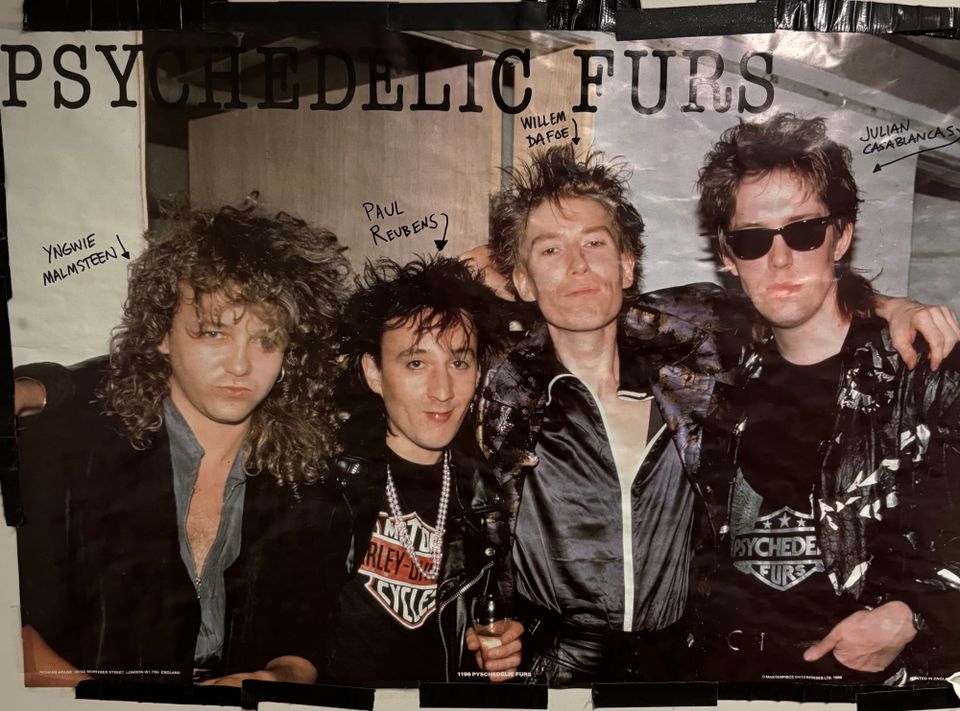
GLIB XENNIAL CONTENT WARNING: Honestly, the opinions below aren't far from conventional wisdom. But I should apologize to anyone over 50 distraught by what some SoCal zoomer music teachers wrote on the poster above. My handy dandy profoundly subjective numerical rating scheme is decoded here.
The Psychedelic Furs (1980) 9
Talk Talk Talk (1981) 9
Forever Now (1982) 7
Mirror Moves (1984) 5
Midnight To Midnight (1987) 6
All Of This And Nothing (1988) 6
Book Of Days (1989) 6
World Outside (1991) 4
Here Came The Psychedelic Furs: B-Sides & Lost Grooves (1994) 6
Should God Forget: A Retrospective (1997) 5
Greatest Hits (2001) 5
Made Of Rain (2020) 6
It’s well known that the most famous and fashionable early Sex Pistols fans were “the Bromley contingent,” a group of young Roxy Music and David Bowie freaks that included Siouxsie Sioux. While fans of trashy, danceable, synth-touched glam were inspired and delighted by the colorful chaos provided by punk, most didn’t lose their affection for quirky club crossover. In a sense, much of post-punk “new wave” came from art-garage acts and enthusiasts adjusting their established sensibility for the new marketplace. Even if that just involved punchier songs and more striking haircuts.
The Sexy Pistols say "We Love You" in 1981.
“New wave” had been underway for a couple years when London's The Psychedelic Furs broke through, but no one did a better job of incorporating the Sex Pistols’ scabrousness with the stylish flash it interrupted (shout out to X-Ray Spex, whose similar junk-punk had already come and gone). Their very name suggested a desire to have camp cake and wreck it too. Duncan Kilburn’s saxophone harkened back to Andy Mackay’s pagan pomp in Roxy Music, but guitarists John Ashton & Roger Morris traded riffs less complicated than what Roxy’s Phil Manzanera pulled off by himself. And forget solos - those were Kilburn’s job! Drummer Vince Ely pushed the ruckus from behind like a gorilla thwacking trash cans, while singer Richard Butler emitted an angry aloofness like Johnny Rotten in sunglasses, or a Bowie too bitter to dream of a better world. Tim Butler played bass, but, as with their precedents, its presence was usually theoretical.
Though hailed in their moment, and still a retro festival perennial, the Psychedelic Furs are a bit underrated today. Blame it on how strongly they came out of the gate, and how quickly they were compelled to chase pop success. Instead of put alongside The Cure and New Order in the post-punk pantheon, the Furs often get filed below Billy Idol and The Cars as ‘80s flashback fodder. True heads know, however, and new generations of romantics will find out thanks to Furs-featuring streaming lynchpins like Pretty In Pink, Stranger Things and Call Me By Your Name.
The version of "Pretty In Pink" you'll hear anywhere today, except in the movie.
The self-titled debut opens with a slow burn at a girl named “India,” Butler shouting about how stupid & useless they are. That’s followed by a plea for “Sister Europe” to realize how stupid & useless everything is. And I mean literally: only one song on the original UK album doesn’t contain either the word “stupid” or “useless.” That song, “Imitation Of Christ,” is next, and the weakest, followed by six that barrel and bounce with a paradoxically snide joy defined by a proto-rap “Wedding Song” (chorus: “we’re useless”) and “We Love You,” a list of things Richard Butler either loves sincerely or loves ironically or hates or who knows? It’s not like the guys standing around him care. The American label removed a rocker, added two lesser tracks, and moved the songs around to make it more evenly, boringly paced. Thankfully, the CD restores the UK order, putting those extras at the end.
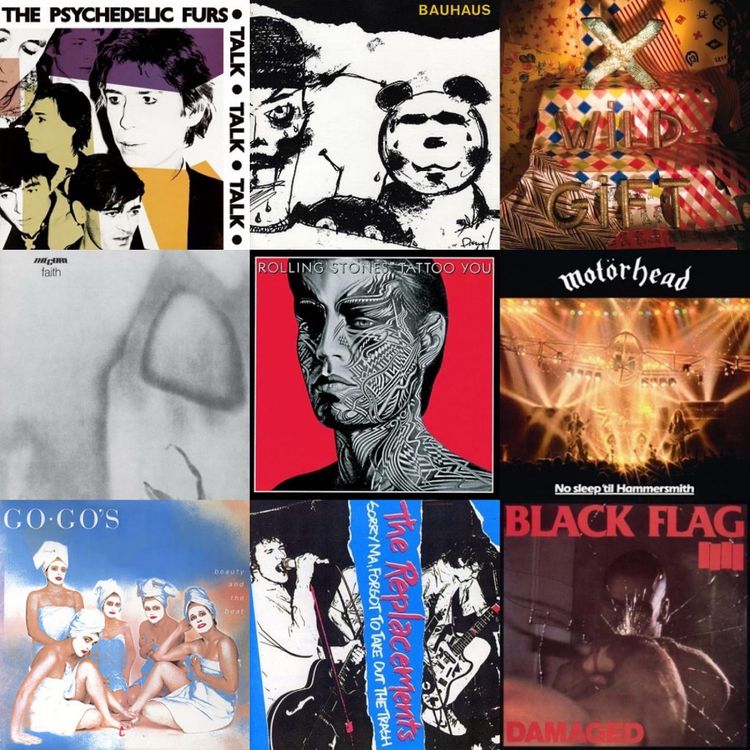
Produced in its entirety by Steve Lillywhite (having handled most of the debut), Talk Talk Talk shows considerably more care in terms of hook deployment and tonal breadth, without diminishing the band’s unkempt authority. “Pretty In Pink” is the pop peak of the initial phase, Butler achieving Bowie-level charisma, mourning a girl who isn’t as stupid and useless as the boys think (the Starman was Furs fan enough to suggest producing, and I suspect the influence became mutual somewhere between Lodger and Let’s Dance). Ely brings Bonham thunder throughout, and Kilburn showed he could synth as well as he’d sax. “I Wanna Sleep With You” and “Into You Like A Train” blow past the Cars in terms of horny AOR crossover, almost heading into Motörhead territory. This time the UK track listing peters out instead of ratcheting up, and I prefer how the US song order leads with “Pretty,” and breaks up the ballads. But the same ten songs appear either way.
Not to be rude, Furs, but...did you guys lose weight?
Though Talk’s singles almost went top 40 at home, and America was starting to pay attention, there was no time to celebrate. Morris and Kilburn were thrown out after the tour, Lillywhite either too busy or too familiar to produce again, while the label remained less than impressed. The remaining quartet went to Todd Rundgren’s studio, in upstate New York, and came out with 1982’s Forever Now. “Love My Way” is the pop classic you’d pray such a recipe would provide, vibraphones and backing “ahh”s by Flo & Eddie distracting from the distinct lack of bombast behind Butler’s knowing purr. The rest isn’t awful, particularly “President Gas”’ revulsion at Reagan’s America (“it’s sick - the price of medicine!”). But Rundgren’s heavy hand is revealed a poor substitute for the missing third of Talk’s line-up. The UK track listing is the easier listen this time, but again it’s the same ten tracks. For a band Columbia never loved, the label sure liked to tinker with their discs, the Furs’ album covers being altered across the Atlantic as well.
Forever Now went gold in the US, “Love My Way” just missing the Top 40 in both territories. But the band only got smaller and more adrift after Ely quit (ironically, the snare smasher would co-produce Ministry’s notoriously twerpy debut). Keith Forsey, fresh off the success of Billy Idol’s Rebel Yell, was brought in to helm Mirror Moves, and finally make Richard Butler a star. Another cult-smash single, “The Ghost In You,” followed, its billowing, bittersweet synthscape perhaps commercially hindered by a chorus that resembles “inside you, the time moons, and Cheeto fate.” But Forsey’s help behind the board (and drum kit!) renders the band’s arch art-pop and increasingly earnest love letters more anonymous than ever. I know some people love “Heaven,” their first UK Top 40. But that guitar solo? So off-brand.
Honestly, this song rules. But at what cost?
Though the 1986 movie Pretty In Pink was about a chaste, class-crossing high school love triangle, rather than a slutty club rat, Butler’s lyric and John Hughes’ script were both tributes to a wronged but proud girl, and the Furs provided a re-recording for the soundtrack (this St. Elmo’s re-fire is almost tolerable, until the guitar solo. The original didn't even have one!). The US Top 40 was just missed again, an injustice label and band alike were determined to rectify. Chris Kimsey of Rolling Stones and Killing Joke fame produced Midnight To Midnight, which looks and sounds like a dramatic hairspray ad. It’s brisk and full of sax, though, courtesy of jazz pro Mars Williams. The near-parodistic ballad “Heartbreak Beat” (“it feels like love!”) finally got the band’s name spoken by Casey Kasem, reaching #26 in America just as Brat Pack movies started flopping. The best Psychedelic Furs song of the mid-‘80s is The Cure’s “A Night Like This,” right down to a sax solo and dramatic utterance of “stupid” (Robert Smith was a vocal fan of The Furs, regularly poaching engineers like Phil Thornalley and touring keyboardists like Roger O’Donnell).
The Butlers, embarrassed by “Beat” and nostalgic for being in an actual band, brought Vince Ely back for “All That Money Wants,” a refreshingly cynical, noisier number attached to the compilation All Of This & Nothing. Perhaps noticing how badly the Cure was outpacing them commercially, the Furs brought in their producer, David M. Allen, for 1989’s Book Of Days, released just a half year after Disintegration. The instrumental trio creates a solid arena goth backdrop, with Tim Butler more prominent than usual between Ely’s pounding and Ashton’s squalling. Tragically, it’s Richard Butler that keeps the album from being their best since Talk Talk Talk, his hollering unprecedentedly devoid of tune or charm. Only the spirited, bitter single “House” suggests the belated post-punk triumph this album really could have been.
The best Furs compilation would end with "House"...not leave it off.
Ely was quickly gone again, with World Outside little more than professional early ‘90s alt-product. Butler’s increased melodicism is almost perverse, as the striking musical attack of Days is replaced by anonymous layers and loops. The number of invested people behind the scenes and in front of the stage continuing to atrophy, the Furs took a long break. Ashton did some producing and the Butlers started Love Spit Love, best remembered for covering The Smiths on the soundtrack for The Craft. Woof.
It’d be easy to make a worthwhile Furs compilation by snagging the two or three biggest songs from each album, but the ballad-heavy All Of This & Nothing and 2001’s Greatest Hits don’t even pull from the early albums astutely. 1997’s double-CD Should God Forget is even more dubiously curated, bloated with later misses (no “House”!) and live cuts. Ironically, the B-sides and 12” edits on Here Came The Psychedelic Furs provide a more enjoyable listen than the best-ofs, ignoring classics for frisky remixes of lesser hits, and novelties like the Days outtake “Badman” (left off the album for featuring sax?).
The whispers of "can still get it" that must follow the viewing of this video.
Love Spit Love reteamed with John Ashton and called it the Psychedelic Furs for some tours in the ‘00s. Richard Butler released a solo album in 2006, and by the end of the decade, only the Butler brothers connected the touring Furs to the Columbia years. It looked like painting would be Richard's primary creative outlet until the surprise comeback of 2020’s Made Of Rain. Recorded with long-time road members and a few hired hands from the ‘80s (most notably Mars Williams and Days’ keyboardist Joe McGinty), Rain makes for a far worthier potential swan song than World Outside. The accent's on "swan," with the album their longest yet, full of grand ballads and tender star turns from Butler. “This’ll Never Be Like Love” sounds like peak-era Pink Floyd! In a good way! It’s almost as if they wanted another swing at Book Of Days, though the new musicians (Williams, who died in 2023, aside) don’t even try to pull focus like Ashton and Ely would have.
If Rain wasn’t impressive enough, Richard Butler co-wrote Depeche Mode’s “Ghosts Again” in 2023, their biggest and best hit this century. Despite never topping the self-contradicting, chaotic cool of the Psychedelic Furs' earliest albums, nor quite achieving the pop glory they so aggressively sought, the Butler brothers have wound up career artists with nothing to prove, still capable of an arresting, unexpected turn of taste and craft. Which honestly might be better than being Billy Idol.
Wait. Is "Ghosts Again" a sequel?
The Psychedelic Furs and Talk Talk Talk are respectively at 30 and 97 on My Top 400 Albums Of All Time. I'm telling you this because I've found people are more inclined to discuss and share reviews if there's a quantitative element at the top or bottom they can easily debate. Prove me right! All raves, requests and recriminations can go to anthonyisright at gmail dot com.