Shrill Villainy: Blurbing For The Weekend 1/9/26
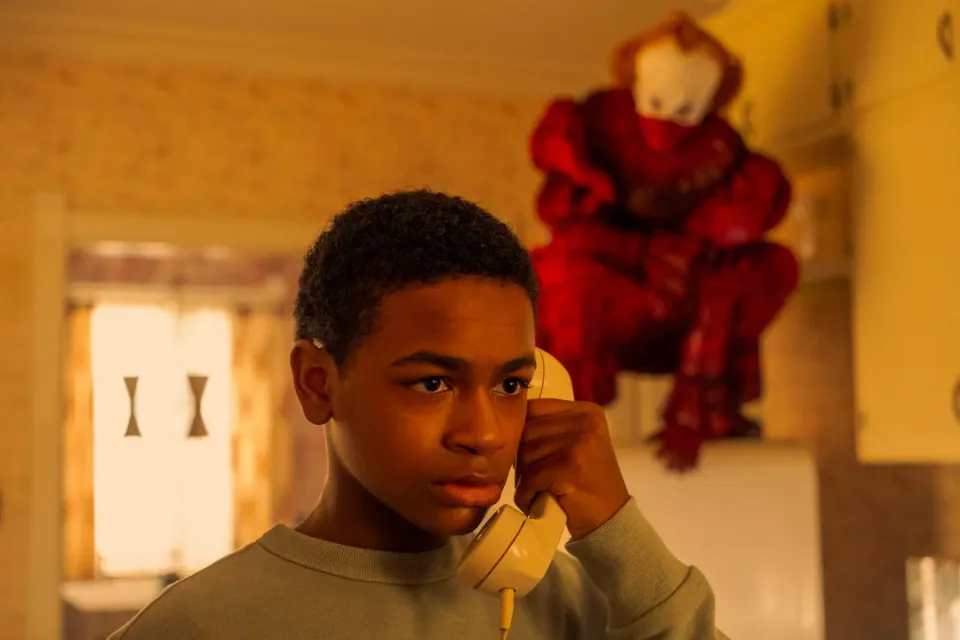
Why I bothered to hate-watch It: Welcome To Derry is too big a matter to go into here. Finishing HBO’s 2025 prequel to the late ‘10s movies based on the 1986 Stephen King novel that unknowingly helped define my latchkey tweendom inspired me to download nearly 48 hours of of Steven “Wings” Weber reading the book aloud. Less than half-way in, this audio journey has been so gripping and reflective I know I’ll write all about the original later. But for now, I’ll note that It: Welcome To Derry is hopefully the worst “prestige” TV I will ever endure in full. At least, I plan to abandon any show that makes me think “this is worse than It: Welcome To Derry.” I may see stupider, or sillier, or more absurd television, but only if that hypothetical show achieves of the saving grace of being “so bad it’s good.” Derry, however, isn’t “so bad it’s good.” It’s either a tolerably grandiose, if hollow, tale of supernatural child endangerment, or a bafflingly mindless exploitation of cultural affection for the original material. Your call.
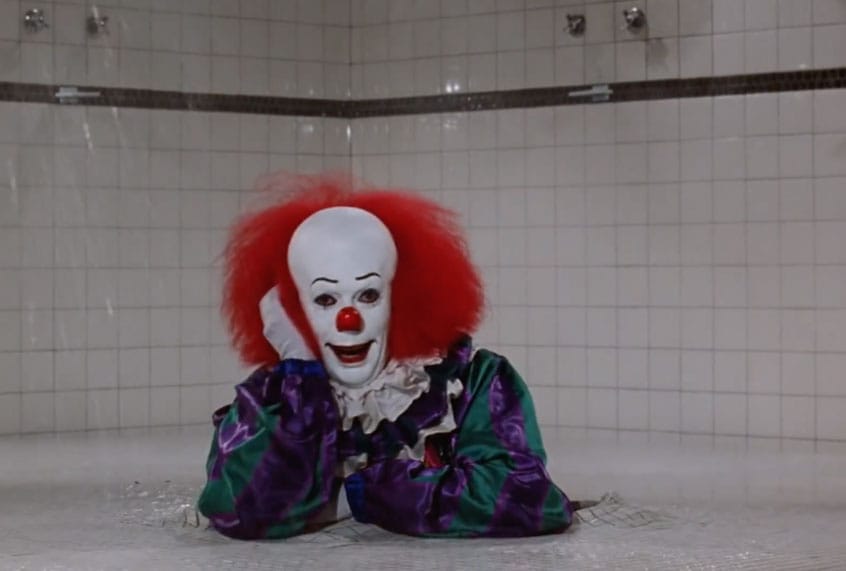
The related films struck me as a “take the money and run” operation, where the first movie satisfied fans’ desire to experience the story on the silver screen just enough to make a thin, half-baked Chapter Two mandatory viewing. With It: Welcome To Derry, the creative team rides into town again, asks if we have any more money, takes it, and runs off screaming “back in three years or so! Promise!” If moments of tone-deaf humor and cruelty in the movies left you wondering whether director Andy Muschietti understood why the book was so loved, the opening sequence of his Derry pilot makes clear that, at the very least, he doesn’t give a shit.
It’s not terrible as far as prestige TV horror goes. A runaway hitch-hiker is picked up by a square suburban family, the scene turning creepier and creepier until mom delivers birth to a flying demon baby, its crowning shown in an extreme close-up more John Waters than Ryan Murphy. The problem is, this crude, transgressive imagery isn’t staged for the terror of the child hostage in the backseat, but for our amusement. He can’t even see the baby until comes out from under mom’s skirt, soon closing his eyes and turning away, sucking on a pacifier as the creature prepares to kill him from behind. “Isn’t the whole point that the kid witnesses the waking nightmare?” you might think, before a CGI pacifier bursts through a broken window, panoramically falling off a bridge and into a sewer drain, where the title card awaits.
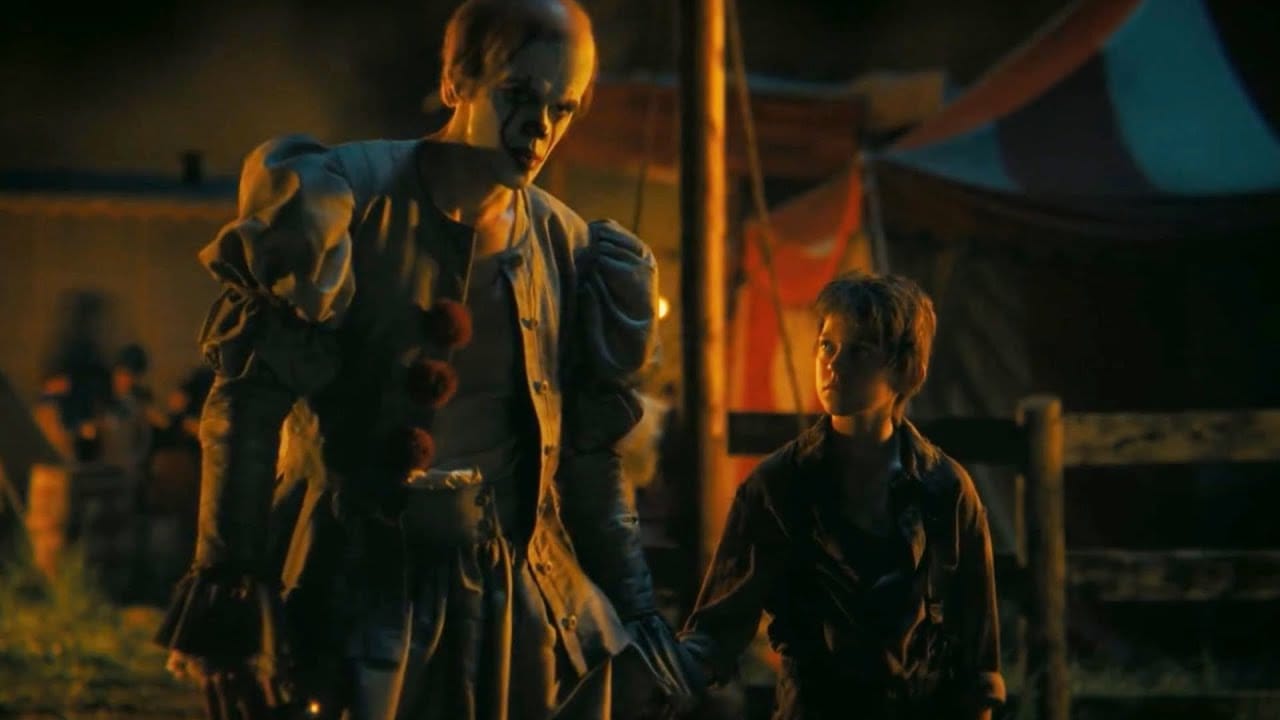
This isn’t the last time the show abandons the evil entity’s whole raison d’être for modern cinematic cliche, and it’s funny to imagine King writing this shit. “As the young girl passed the beaming hausfrau in the cereal aisle, the woman bent downward like a demented marionette. If only the girl had turned to see this ghoulish spectacle…but she carried on. A swing and a miss, Pennywise.” It: Welcome To Derry manages to add mountains of exposition to the story, while at the same time making everyone’s motivations ever more incoherent. Someone watching the prequel before the movies would wonder how a tale of the US Air Force attempting to co-opt Native American folklore about a space demon in order to…fuck shit up, basically…would lead twenty-some years later into the story of seven children fighting the demon with no assistance from the military, the local tribespeople, or even their parents and grandparents who stayed in town for the very purpose of keeping lookout. It’s a post-Stranger Things prequel to material that helped inspire Stranger Things, particularly humiliating if you knew better than to watch Stranger Things.
Biding my time before indulging, I assumed recaps had prepared me for the inanity of it all (the ghost vs bicycle race in episode 3...how were so many TV professionals fine with this Garth Marenghi business?!). I knew It: Welcome To Derry would fail King not just in terms of text but subtext, having more black characters while avoiding the book’s frank treatment of mid-century racism in the far Northeast. Also noted were likable performances among the adults and children enduring the terror, and that James Remar - playing a lieutenant general somehow permitted to stage a major military operation in Maine, centered around a psychic private, and based solely on a once-buried childhood memory - does miraculous work maintaining his credibility despite playing perhaps the stupidest character in the history of the medium. The mis-en-scene is ostensibly Stephen King, but the story is sub-Amblin, and his actions are sub-MacGruber. Yet, somehow, Remar never looks into the camera and crosses his eyes. He never stifles giggles behind fake eyebrows like Morgan Freeman playing a similar role in the King adaptation Dreamcatcher. He never comes off oblivious to the madness like Gregory Peck playing a clone-crazy Josef Mengele in The Boys From Brazil. Instead, Remar commits to a sensitive portrayal of a jaw-dropping, unbelievable loony-bird from Planet Dumbass, a thespian minefield that would make more famous actors disassociate or call their agent, without making sure we know he’s better than this, or even ashamed to be doing it. James Remar is truly a warrior who can play with the best of them.

I thought an awareness of these flaws and virtues would let me enjoy the show much like I did my belated viewing of Game Of Thrones. But finishing the season wasn’t like sighing “that’s Westeros!” with an amused smile. I was debating the choices that led me here, as I did after watching a VHS copy of Screwballs in my early 20s. That excruciating, perversely spirited nadir of ‘80s sex comedy had me seriously debating joining the priesthood, the act of physical love perhaps deprived of any pleasure and mystique forever (thankfully, I was fine in the morning). As Derry collapsed into nonsensical monologues, mediocre CGI and rotten, stomach-turning easter eggs, after reducing the fire at The Black Spot (iykyk) to inept, green-screen chaos and cornball heart-tugging, I debated whether it was time to say goodbye to Hollywood, committing myself to works of art made fully outside the American entertainment industry, by people with no desire to enter it. As with Screwballs, I was fine in the morning. But I went there.
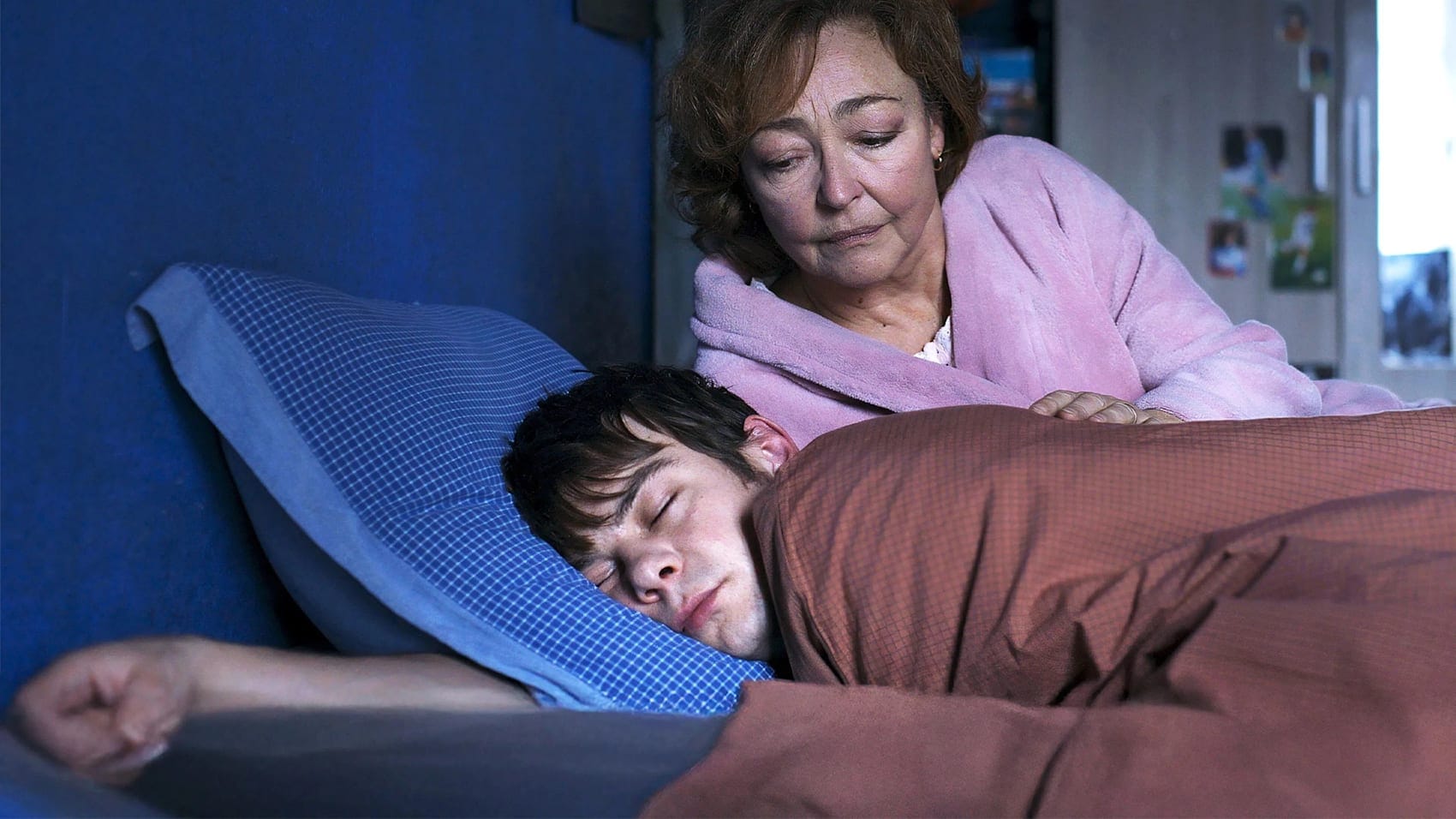
A good egg by the name of Scott Seward, who espouses similar “am I too old for this shit?” sentiments after a dispiriting film, really liked the 2024 French film Misericordia. So did Alfred Soto, a good egg too disciplined in his media input (he reads a lot) to indulge such dark nights of the nerd soul. I’m glad they were loud, as it’s the kind of foreign slow-burn I rarely roll the dice on, and I got 7s. Misericordia starts as one of those movies where a sketchy guy comes back to his small town and unburies everyone’s secrets. And I mean everyone. It seems like literally no one outside the central cast lives in a three-mile radius. However, this conceit (somewhat explained by it being “off-season”) benefits the spacious, yet ironically suffocating, atmosphere. I don’t want to say there’s a twist, as the experience is far more artful than some M Night switcheroo. Rather, the story gradually develops past familiar explorations of buried homoeroticism and small-town violence in surprising, untelegraphed ways I had to unpack and marvel at afterwards. If I do flee familiar filmwork for relatively esoteric and adult artistry, I might still have a good time. FIVE BAGS OF POPCORN.
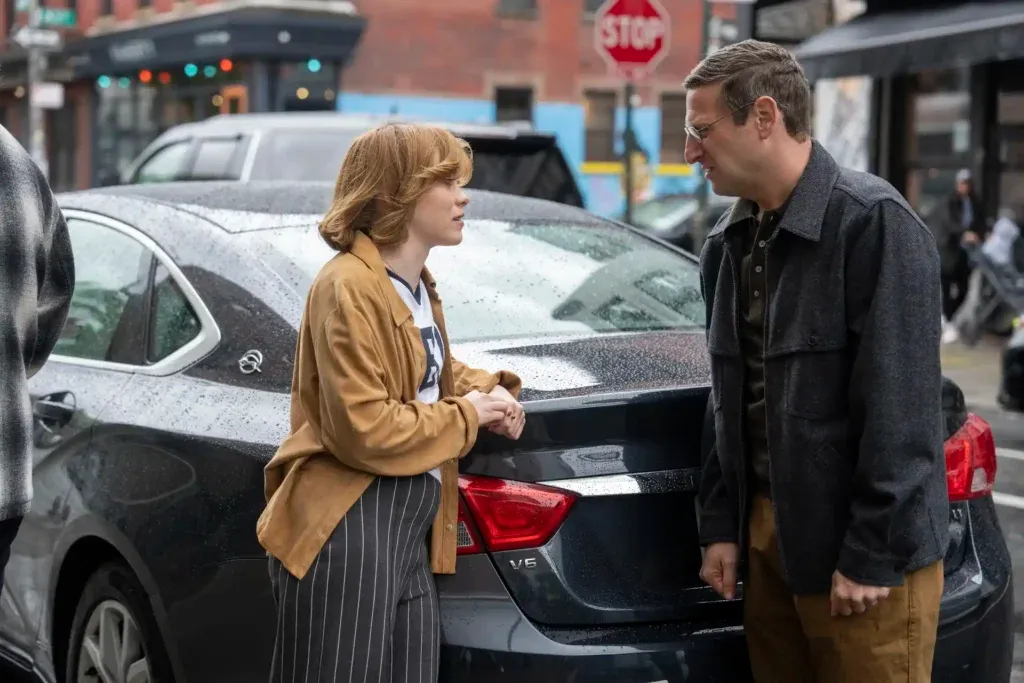
I haven't even abandoned HBO Max, though, the site quickly redeeming itself with a viewing of The Chair Company. I‘ve generally enjoyed the comedy of Tim Robinson, which mostly revolves around frantic refusals to either acknowledge or back down from an absurd position (the very first sketch on Netflix’s I Think You Should Leave with Tim Robinson involved a door that he was going to open inward no matter what). However, it can get tiresome when no one else on screen is allowed to scream or be strange, which made his earlier show Detroiters - co-starring Sam Richardson as a childhood friend and ad agency partner no less capable of defensive anger - more enjoyable than the nearly guest-free third season of I Think You Should Leave. I still haven’t seen him in Friendship, the latest, and likely archest, movie about a goofball trying to bond with Paul Rudd, and I didn’t watch Company until my royal tasters said the season finale wasn’t poison. It ain’t.
Though less ambitious than Nathan Fielder’s The Curse, Robinson’s venture into prestige narrative similarly creates a setting where the comedian’s frustrations and follies aren’t anomalous. Just about everyone in the family of Robinson’s mid-level exec and at his property-development workplace is struggling with neurotic obsessions and a need to feel their perspective is respected. While he’s the one we’re watching spiral into paranoia and/or discover a bonafide criminal conspiracy, his preening boss (Lou Diamond Phillips) knows he experienced true inspiration at a Sedona retreat, even if no one can translate it. The county clerk receptionist can’t believe her boss is harassing her about going home to shower. The custodian knows he brought the inside wheelbarrow outside and was praying no one noticed. The Chair Company isn’t about a weird man in a normal world, or a normal man in a weird world. It’s about a world where people are making it weird for each other, and it’s not clear who started it.
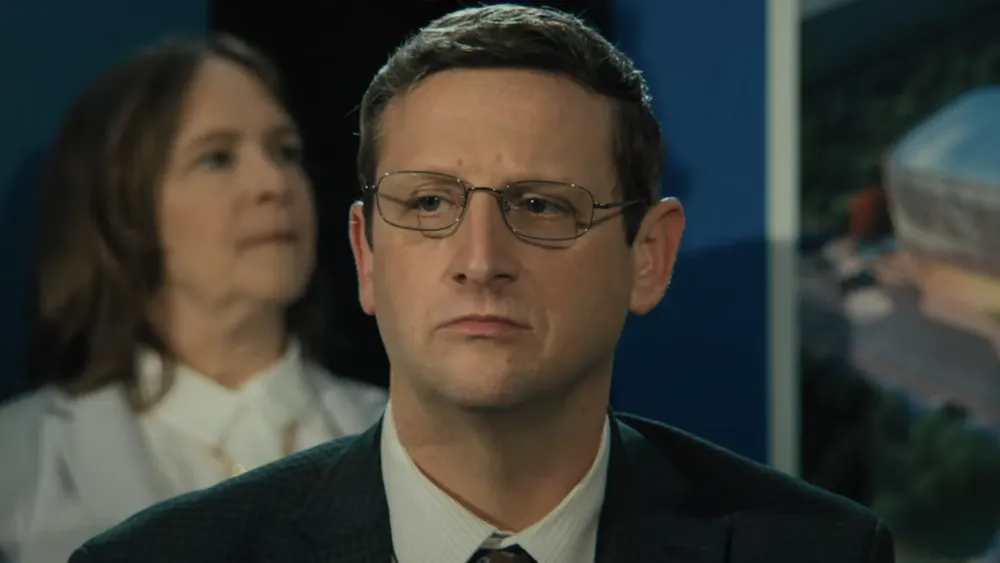
The show is interpersonally grounded and affectionate in ways that undercut the shrill kookiness Robinson is sometimes discounted for, though it doesn’t remotely transcend the accusation. White guys who think Tim Robinson’s shtick is about White Guys (ignoring the effort made to incorporate non-white or non-male actors, Richardson and Patti Harrison for instance, in the chaos) will still moan in ecstasy that this dude gets it. But if you don’t hate Adult Swim lunacy on principle, The Chair Company is an impressive swing up and out of that sphere, without denying fans the simple pleasure of a guy throwing a box on the ground because he’s just so tired!

I never saw much of X-Men: The Animated Series in the ‘90s, so I decided to give it a look to see if my comic-canon curious kid might like it, and if it was worth my time before investigating the recent adult update X-Men ’97. The opening carnage with the Sentinels was too sci-fi dystopian nightmare for me to spring on the kiddo for another year or three, but the show has made for nice meal accompaniment. A friend and I bonded over X-Men Classic reissues of Dark Phoenix era stories in 3rd grade, but I preferred quirky Keith Giffen and Vertigo titles to the leather-laden, then ‘roided out, X-stories that were poppin’ fresh at the time, so the show has helped me understand what appeal characters like Gambit and Cable could plausibly have for those who don’t love pouch-covered leg-straps and massive laser guns. I’m two seasons in, the first doing a solid job of getting across the familiar “can super-powered mutants co-exist with humans?” set-up and core characters, the second season teaching me that lesser X-adversaries tend to be shrieking, maniacal weirdos who want enslaved mutants to super-dig trenches for them on island paradises, the way a lot of Batman villains are just crime-bosses committing to a Met Gala theme. I’ve heard later seasons get soapier, which is going to be wild if the shrill volume of the dialogue keeps up.
My popcorn ratings for movies are explained here. I haven't figured out a metric for rating TV beyond "I finished a season," and I'm fine with that. If there are any other recent foreign films or decades-old superhero cartoons you'd like to see blurbs about, let me know at anthonyisright at gmail dot com. You may get your wish.